








Circular economy designs for sustainable gardens
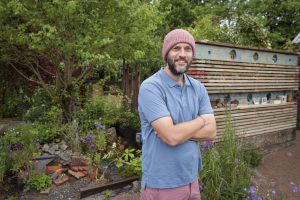
David Negus, designer of the European Commission’s ‘Renewed Blooms’ Garden, which won a gold medal and the award for Best Medium Show Garden at Bord Bia Bloom 2025, shares advice on how to embrace the circular economy in your garden.
There are many ways we can support the environment in our gardens and outdoor spaces, from planting pollinator-friendly flowers and creating wildlife habitats, to harvesting rainfall and eliminating the use of harmful chemicals. Making sustainable choices in your design and build is also hugely important and this can be achieved by embracing the principles of the circular economy by reusing and regenerating materials and products. Here are my top three tips to help you get started:
1. Design for continuous renewal
When designing or updating your garden, try to choose products or items that are created with materials that can be endlessly reused, composted, or upcycled. This could be biodegradable garden products or structures made from materials that will return beneficial nutrients into the soil, such as raised beds made from untreated timber that will break down slowly and enrich the soil underneath.
Other examples include cardboard sheet mulching that will smother weeds, add carbon to the soil, and encourage microbial life, or living willow domes and tunnels that grow, die back, and become wildlife habitats and soil biomass. You could also try building dead hedges or bug hotels with clippings and creating paths with bark mulch rather than paving. These will have an added benefit in rebuilding soil health and supporting biodiversity.
2. Prioritise local, circular resources
Sourcing materials locally helps cut transport emissions and keeps resources in closed-loop cycles. Look for recycled brick and reclaimed wood instead of newly manufactured materials. These may be found on Facebook Marketplace, Freecycle and zero waste websites, or your local neighbourhood group chat. Not only is this good for your pocket, but it is also beneficial for the environment as it reduces demand for virgin materials and long haulage.
3. Think and look outside the box
What do you already have – or what can you find nearby – that you can use differently? Do you have existing materials that you can adapt, thereby extending their lifecycle? In my experience as a garden designer, there is a vast array of quality materials that can be easily repurposed by thinking outside the box.
You will find a rich selection of materials in salvage yards, but it is also worth talking to local builders’ providers, building contractors, or nurseries, to find out what unused stock they have left from previous jobs. I have sourced many items for clients, and for my own garden, by calling or popping into a local business and being polite! People are often keen to help.
The circular economy in living colour
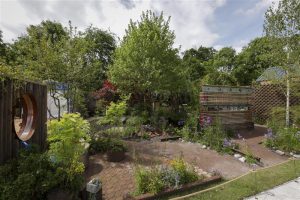
At Bord Bia Bloom 2025, visitors saw the circular economy in action in my award-winning design for the European Commission’s ‘Renewed Blooms’ Garden. It embodied EU circular economy principles by repurposing materials and blending nature with human-made elements. I used items like a discarded railway track and facade tiles made from recycled PVC windows to showcase how waste materials can be transformed into functional, durable, and striking design features.
The garden was designed to challenge perspectives on waste and inspire reuse and repurposing. To support this, we held a number of DIY workshops throughout the weekend with our friends in the Rediscovery Centre, Ireland’s National Centre for the Circular Economy, where many elements of the garden were relocated after Bloom.
David Negus, founder of The 3D Gardener design studio, is an award-winning garden designer and visual artist from Suffolk, England. You can see more of David’s work on www.the3dgardener.co.uk and follow him @the3dgardener.
Related Content